Index ETFs
- Examples
- XEQT, VFV, QQC, VDY
- Payout
- about 1–4% a year
- Gives you
- The full market return at very low cost
- Costs you
- Little income now; you sell units to spend
- Best for
- Long horizons, TFSAs, people still earning a salary
Financial education services · Kitchener, Ontario
One-on-one coaching for families who came to Canada to build something. Learn how passive income investing and options actually work, at your pace, with your own accounts in front of you.
About your coach
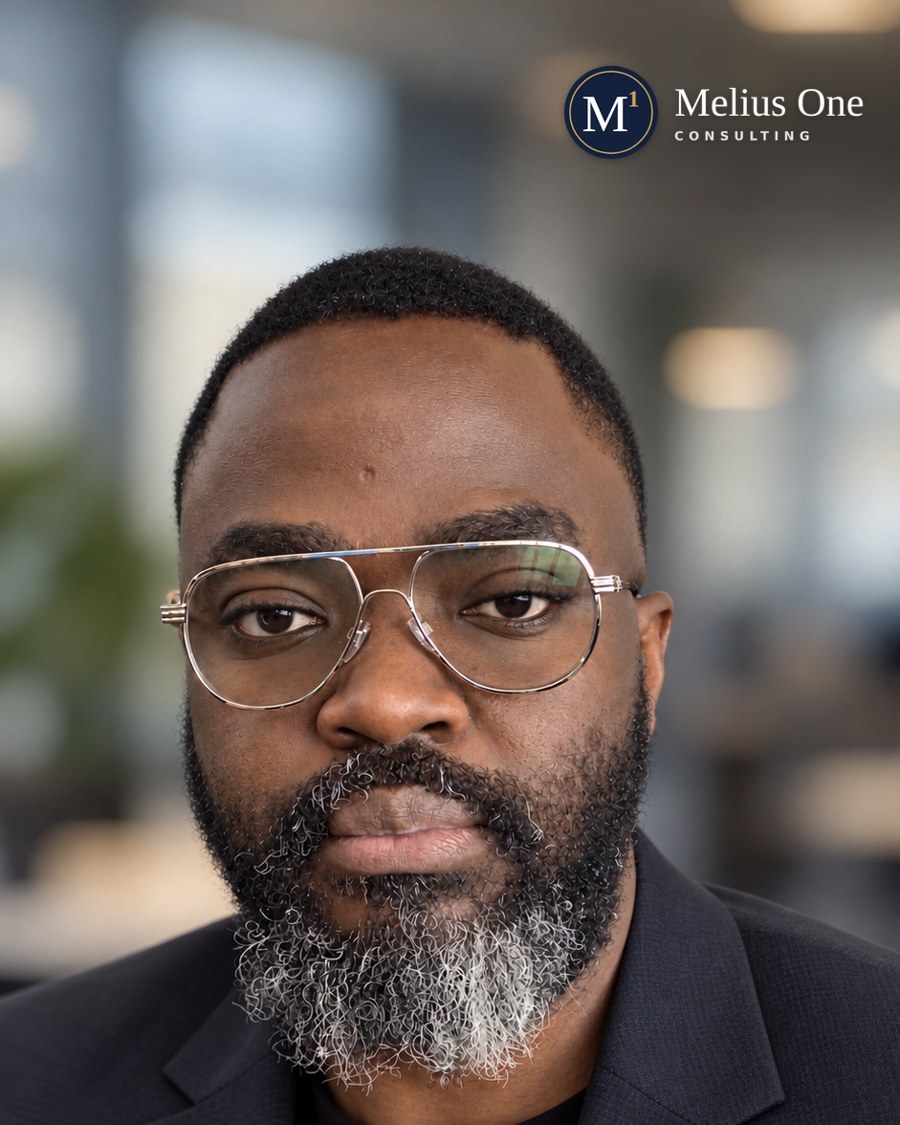
I came to Canada to build a better life for my family, and learned the hard way that a salary alone rarely gets you there. Today my family lives on income from our own investments. I started Melius One to teach other families how to do the same, clearly and honestly.
Ten-year projection
My family lives on about $7,000 a month from the portfolio, and every dollar beyond that is reinvested. How far it grows depends on the market.
12% a year
15% a year
17.6% a year, as 2010–2019
How this is worked out: starts at $850,000; $84,000 a year is drawn for living costs; the income funds are assumed to return 1.25 times the market less 3% a year in costs; income is about 21% of the portfolio’s value, as it is today. Before tax. An illustration of three possible paths, not a forecast or a promise. Markets can do worse than all three.
Funds we cover
| Fund | What it holds | Type | Yield | Pays |
|---|---|---|---|---|
| MSTE | Strategy (MSTR) shares, covered calls, leverage | Income | ~45% | Monthly |
| HHIS | US large-cap shares, covered calls | Income | ~29% | Monthly |
| HONE | All-in-one: HHIS, HHIC and HHII | Income | ~21%* | Monthly |
| EASY | Global shares, covered calls, modest leverage | Income | New fund | Twice a month |
| CDAY | Canadian shares, covered calls | Income | ~19% | Twice a month |
| SDAY | US dividend shares, covered calls | Income | ~19% | Twice a month |
| QDAY | Nasdaq-100, covered calls | Income | ~18% | Twice a month |
| BDAY | Bitcoin, covered calls | Income | ~15% | Twice a month |
| HDIV | Canadian sector funds, covered calls | Income | ~10% | Monthly |
| VDY | Canadian high-dividend shares | Dividend | ~3% | Monthly |
| XEQT | Global shares, all-in-one | Growth | ~1.6% | Quarterly |
| VFV | S&P 500 | Growth | ~0.8% | Quarterly |
| QQC | Nasdaq-100 | Growth | ~0.3% | Quarterly |
How it works
Sixty minutes, just you and me. What passive income is, what it isn’t, and whether coaching fits you.
FreeSix private sessions working through the curriculum with your own accounts, numbers and goals.
$594 · six sessions at $99 eachMonthly reviews once you’re investing: what your funds paid, what changed, and what to watch.
$75 a monthCurriculum
Pay down high-interest debt, build an emergency fund, and set a monthly number you can live on.
TFSA, RRSP, FHSA and non-registered accounts: what goes where, and why it changes your tax.
How covered-call funds pay 15–30%, what return of capital means, and why prices can drift down.
Index funds like XEQT and VFV: low cost, full market upside, small payouts.
Calls, puts, strike, expiry, premium and the Greeks, explained with real option chains.
Cash-secured puts and covered calls on stocks you’d be happy to own.
Long-dated options as a lower-cost way to hold a stock, and the risks that come with them.
Putting it together: how much to hold where, when to reinvest, and the rules you follow when markets fall.
Strategies
Every strategy trades something away. Here is what each one gives you, and what it costs.
The tax advantage
Most of what these funds pay is return of capital, not income. Canada doesn’t tax it when you receive it. Compared with a salary of the same size, far more of each payout stays in your pocket.
In 2025, about 85–100% of the payouts from HHIS and the DayMAX funds (CDAY, SDAY, QDAY) were return of capital. You don’t report it as income in the year you receive it.
Instead, each payout lowers your cost base. Tax comes when you sell, or once the cost base reaches zero, and then as a capital gain: only half of it is taxable.
Hold these funds in a TFSA and every payout and every gain is tax-free, for good. A non-registered account comes next, and an RRSP defers everything until you withdraw.
Because return of capital isn’t income, your reported income can stay low. That can help with income-tested benefits such as the Canada Child Benefit.
Example · Ontario, 2026
The same $100,000 leaves about $26,000 more in your pocket this year, and more again once workplace deductions come off a paycheque.
| Salary | Income-fund payouts | |
|---|---|---|
| Received | $100,000 | $100,000 |
| Taxable this year | $100,000 | about $10,000 (if 90% is return of capital) |
| Income tax this year | about $20,500 | $0 (under the basic personal amount) |
| CPP and EI | about $5,800 | $0 |
| You keep this year | about $74,000* | about $100,000 |
*Before workplace pension, benefits premiums and other payroll deductions, which lower a real paycheque further.
The fine print: return of capital is partly your own money coming back, so it isn’t free. It defers tax rather than cancelling it. The mix changes every year and is confirmed on each fund’s T3 slip, so keep track of your cost base. Figures are rounded and simplified, and this is general education, not tax advice. Check your own situation with an accountant. Coaching covers how to track all of this.
Try it
Assumptions: index ETFs earn the market return less 0.2% and pay 2.4%; income ETFs earn 1.25× the market less 2–3% in costs and pay 19–28%. At 50%, the other half of each payout is spent. Illustration only, before tax, not a forecast.
| Strategy | Income, month 1 | Value after 10 years | Cash taken over 10 years |
|---|
My portfolio · Updated October 2026
I teach what I do with my own family’s money: a four-fund income strategy that pays us every month, plus a long-term position in Bitcoin.
I’ve also sold options, mainly puts and covered calls on TQQQ, in a separate, smaller account. It’s covered in the options modules.
Sign up
Tell me a little about where you are. I’ll reply within two business days with session times.
Prefer to pick a time yourself?
Privacy. Your name, email, phone and notes are used only to arrange and run your sessions. They are never sold or shared for marketing. Ask at any time and your details will be deleted. Questions: contact Melius One Consulting.